
When I learned to cook, I became a fan of spices and herbs - they are the secret to elevating the flavor and character of any dish. While the dried herbs you buy by the jar in the supermarket may get you out of a hurry, nothing compares to the aroma and texture of fresh herbs. There is no way to compare, as the ones sold to you may have been stored for a long time, have lost their properties, and are not as fragrant. Plus taking a few leaves from your lovingly grown plants and adding them to your casserole makes your meal even more special.
If you have dreamed of your potted herb garden but always end up with a bunch of dying plants and a lot of disappointment, don't worry, today I will share with you what I have learned after many failures. I promise you will become that person who grows, harvests, and dries their own herbs if you follow these tips to learn how to care for herbs at home.
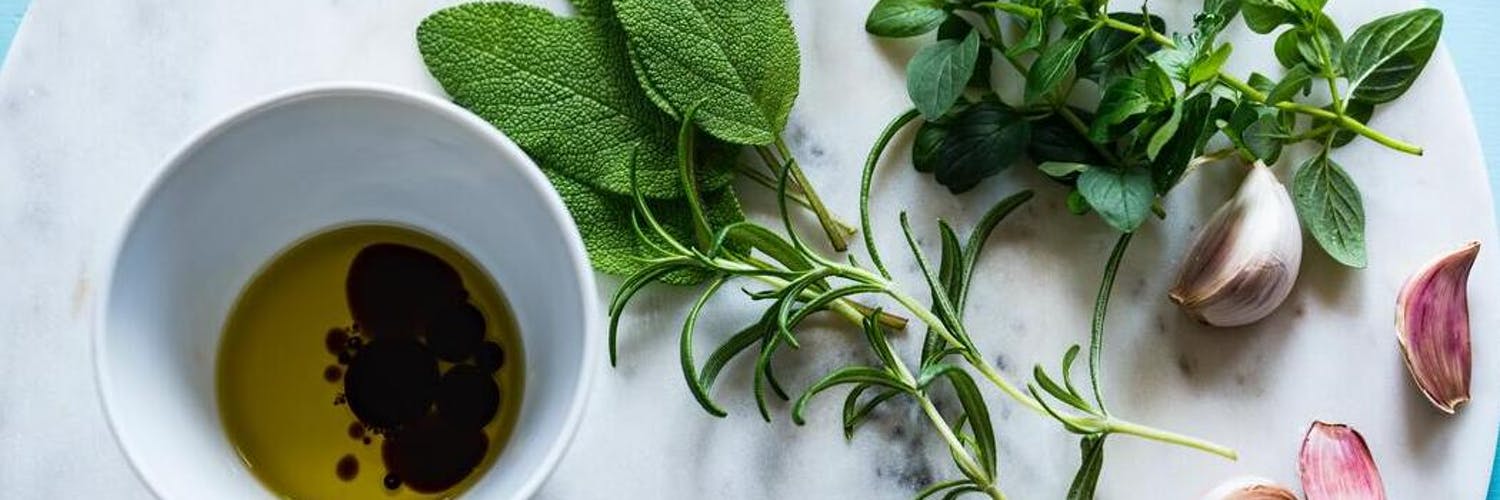
How easy is it to grow herbs at home?
Everyone says that caring for herbs at home is easy, but this statement is relative. Aromatic plants are rather rustic, they practically take care of themselves when they are in ideal conditions, and it is precisely at this point where things start to get complicated, as the ideal and natural conditions for these plants are different from those they will have at home.
Remember that the secret for any plant to grow happily and vigorously lies in faithfully reproducing the environmental conditions of its place of origin. With aromatic plants, it can be a bit tricky because their natural environment is usually outdoors, with direct sun exposure and they are quite wild. Most of these plants do not tolerate being enclosed in pots, trapped indoors, and confined. They are meant to be wild and free.
The first mint plant I bought met a rather tragic end, I had no way to keep it alive and I tried everything: fertilizers, watering, and more. This cycle repeated itself several times, but when I left a small seedling in a planter, almost forgotten and without any hope, it spread so much that I had to prune it because it was choking other plants.
It is a bit of a paradox that aromatic plants are so wild but can be difficult to keep in pots, but it is important to know this contradiction in order to understand the essence of the plant. Understanding their origins will help you to take better care of them, and if they can throw a bit of a tantrum about being in a pot, it is possible to grow them successfully at home. I'll share with you some secrets to help you do just that.
Basic care of aromatic plants at home
Lighting
Aromatic plants require a lot of light. They are not suitable for living in semi-shade (although some manage to acclimatize) and should receive at least 6 hours of direct sunlight a day. Indoors they should be very close to a window or in a place where they can be bathed in plenty of light. This is the secret to beautiful growth.
Substrate
The requirements of aromatic herbs are quite diverse. There are some that have Mediterranean origins, such as rosemary, thyme, and lavender, which will be happy in a very sunny spot with a very sandy and poor substrate; but there are other aromatic plants that prefer warm spaces with moist soils, such as chives, sage, and parsley; while others prefer some shade and warm temperatures, such as mint and watercress.
That said, when it comes to growing aromatic plants in pots, it is preferable to opt for a substrate with a balanced nutrient concentration. A well-drained, rich, garden-ready substrate. A universal substrate, enriched with some peat and worm castings, is ideal.
Watering
Aromatic plants need abundant and relatively frequent watering, depending on the type of plant. This is of vital importance in very hot summers, as exposure to the sun will cause the substrate to dry out more quickly. Annual plants prefer moist but not waterlogged soil, while perennials prefer more spaced watering.
It is necessary to avoid getting water on the leaves, to prevent pests or sunburn. Remember to always water in the early morning or at dusk; this ensures that there is enough moisture at the roots and that it is absorbed quickly. Some aromatic plants are very dramatic and will immediately tell you that they need water, while others are more resistant.
Temperature
Because of where they come from they prefer warm, sunny temperatures, between 18 and 20° C would be ideal. The vast majority of aromatic plants are very cold, they do not like low temperatures and prefer to stay out of the frost. This is why it is essential to keep them indoors when the onset of cold weather threatens.
Comments
0 comments
Please sign in to leave a comment.